
Smart washing machine data gives property managers a clearer view of how laundry equipment performs every day. Many shared laundry rooms appear to run smoothly on the surface. Yet, hidden inefficiencies can drive up costs and frustrate residents. Machines may take longer to complete cycles, consume more water than expected, or sit unused due to reliability issues. Without data, these problems often go unnoticed until complaints increase or repair costs spike.
Property managers are under pressure to maintain amenities that residents rely on while keeping operating expenses under control. Laundry rooms play a direct role in resident satisfaction, especially in multifamily and student housing environments. When machines fail or perform inconsistently, the impact is immediate and visible. Smart laundry systems offer a more informed approach. They collect and organize usage analytics that highlight performance trends across every machine in a facility.
Learning how to interpret that data and identify underperforming units can prevent larger issues. With the right insights, property managers can make informed maintenance decisions, reduce downtime, and plan upgrades with greater confidence.
Why laundry machine performance matters for property managers
Laundry equipment performance affects more than convenience. It directly influences operating costs, resident satisfaction, and long-term asset value. When machines run inefficiently, utility expenses increase while performance declines. Over time, this creates a gap between expected and actual return on investment.
Residents notice when machines take longer to complete cycles or frequently go out of service. These issues often lead to complaints and can impact lease renewals. A poorly performing laundry room may also reduce usage, limiting potential revenue in coin or card-operated environments.
Data from connected systems helps shift decision-making away from guesswork. Property managers can track performance trends across machines instead of relying on service calls. This allows for early detection of inefficiencies that might otherwise remain hidden. Smart washing machine insights make it easier to prioritize upgrades and maintain consistent service for residents.

What data smart washing machines can provide
Modern laundry equipment generates a range of performance data that can be accessed through centralized dashboards. This information provides a detailed picture of how each machine operates over time. Key data points include:
- Cycle counts, which show how often each machine is used, and cycle duration, which highlights whether machines are completing loads within expected timeframes.
- Error codes and fault reports reveal recurring issues that may indicate mechanical problems.
- Water and energy consumption data can uncover inefficiencies that increase operating costs.
- Revenue tracking is another valuable metric in shared laundry environments. It allows property managers to compare machine performance and identify units that are underperforming financially. For example, two machines placed side by side should show similar usage patterns. If one consistently records fewer cycles, it may signal reliability issues or a poor user experience.
Smart washing machine systems bring all this data together in a way that supports quick analysis and informed decision-making.
Key indicators of underperforming laundry machines
Certain patterns in laundry machine analytics can point to underperformance. Identifying these indicators early helps prevent more serious problems and reduces unnecessary expenses.
- Low usage is one of the most obvious signs. When a machine is used far less than others in the same location, it often reflects user avoidance due to past issues.
- Frequent error codes or repeated service calls also signal that a machine may no longer be reliable.
- Extended cycle times can indicate internal inefficiencies or component wear. Machines that take longer to complete standard loads may frustrate users and reduce overall throughput in busy laundry rooms.
- Higher-than-average water or energy consumption is another red flag. These machines increase operating costs without delivering better performance.
Smart washing machine data highlights these trends clearly. Instead of relying on anecdotal feedback, property managers can pinpoint which machines require attention and act based on measurable performance metrics.
How to analyze laundry data effectively
Raw data becomes valuable only when it is interpreted correctly. Property managers should focus on comparisons and trends rather than isolated data points.
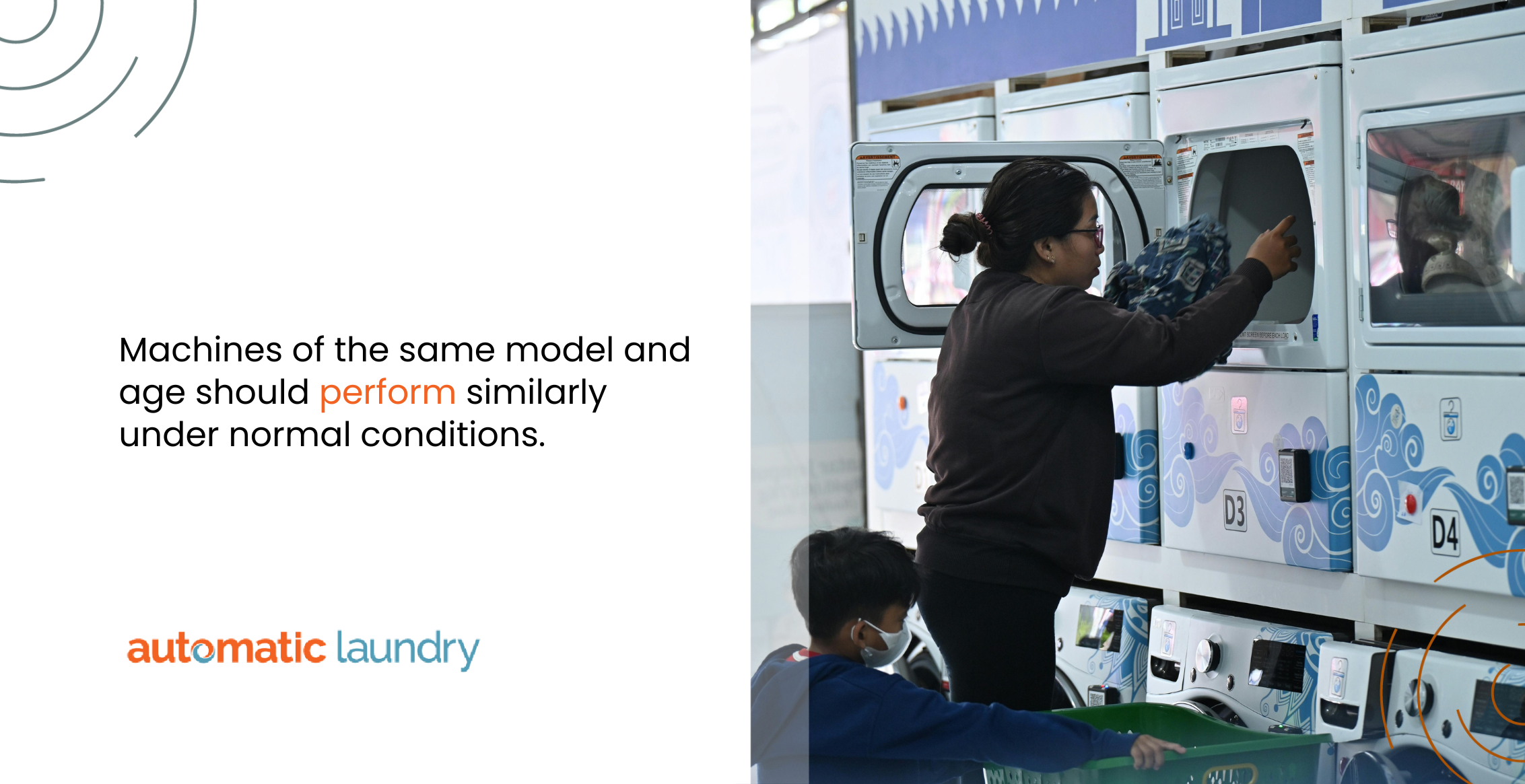
Comparing machines within the same laundry room is a practical starting point. Machines of the same model and age should perform similarly under normal conditions. When one unit stands out as an outlier, it often indicates a problem. Tracking performance over time is equally important. A gradual decline in usage or efficiency may signal wear that requires maintenance.
Dashboards provided through smart laundry systems simplify this process. They present data in a format that highlights key performance indicators and trends. Property managers can review reports regularly to identify patterns such as recurring downtime or spikes in utility usage.
Smart washing machine analytics support a proactive approach. Instead of reacting to failures, property managers can address issues early and maintain consistent performance across all machines.
Using smart washing machine data to make better decisions
Data-driven insights support more strategic decisions about maintenance, repairs, and equipment upgrades. Property managers can move away from reactive service models and adopt a streamlined approach.
When a machine shows signs of declining performance, data can help determine whether a repair will resolve the issue or if replacement is the better option. Maintenance can also be scheduled based on usage patterns rather than fixed intervals. Machines that handle higher volumes may require more frequent attention.
Smart washing machine systems also help optimize laundry room layouts. If certain machines receive significantly more use, it may be worth adjusting placement or redistributing equipment to balance demand. This can improve efficiency and reduce wear on heavily used units.
These insights allow property managers to allocate resources more effectively while maintaining a high level of service for residents.
When to replace instead of repair
Deciding when to replace a machine is one of the most challenging aspects of laundry room management. Data provides a clearer framework for making this decision.
Frequent repairs are a strong indicator that a machine may be nearing the end of its useful life. When service costs continue to rise, replacement often becomes more cost-effective over time. Declining usage is another important factor. If residents consistently avoid a machine, it may no longer meet expectations for reliability or performance.
Rising utility consumption can also justify replacement. Older machines that use more water and energy increase operating costs without delivering improved results. When these factors combine, replacement becomes the more practical option.
Take control of laundry room performance
Smart washing machine data gives property managers the clarity needed to take control of laundry room performance. Instead of reacting to complaints or unexpected breakdowns, managers can rely on real usage analytics to identify underperforming machines, reduce operating costs, and improve the resident experience. This approach supports better planning, fewer disruptions, and more confident investment decisions.
Automatic Laundry helps property managers turn these insights into action. With advanced smart washing machine technology, real-time reporting, and expert support, we deliver reliable, efficient laundry solutions designed for multifamily communities. Whether you are upgrading outdated equipment or looking to improve current performance, the right partner makes a measurable difference.
Connect with Automatic Laundry to explore how data-driven laundry solutions can improve your property’s efficiency and resident satisfaction.