
Community laundry plays an important role in keeping homes fresh during allergy season, especially for residents who rely on shared facilities to care for everyday fabrics. Pollen, dust, pet dander, and other irritants can settle deep into clothing, bedding, and towels. Over time, these particles build up, worsening allergy symptoms, even indoors. A consistent and thoughtful laundry routine helps reduce buildup, supporting a more comfortable living space.
Small changes in how loads are sorted, washed, and dried can make a noticeable difference in how fabrics feel and how clean they truly are. Shared spaces also call for a bit of extra attention since machines are used by many people throughout the day. With a few practical adjustments, residents can get better results from each wash and limit exposure to unwanted allergens. The goal is not perfection, but steady habits that keep fabrics cleaner.
Why laundry matters during allergy season
Allergy season brings more than just sneezing and itchy eyes. It also introduces a steady flow of pollen and dust into clothing and linens. If you have pets or are exposed to others’ pets, you can carry dander in your fabrics, transferring it to every corner of your home. These particles cling to fibers and remain there until properly washed. Significant buildup can happen in a short time, especially when using community laundry facilities that handle frequent loads. Regular washing helps remove these irritants before they settle in deeper.
Tweaking your laundry habits leads to better outcomes. Washing items after outdoor use and sticking to a consistent schedule can reduce how much pollen and dander lingers indoors. Community laundry users benefit from staying mindful of how fabrics are handled from the moment they are worn to the moment they are stored. Cleaner fabrics support easier breathing and more restful sleep during peak allergy months.
Smart sorting for better allergen removal
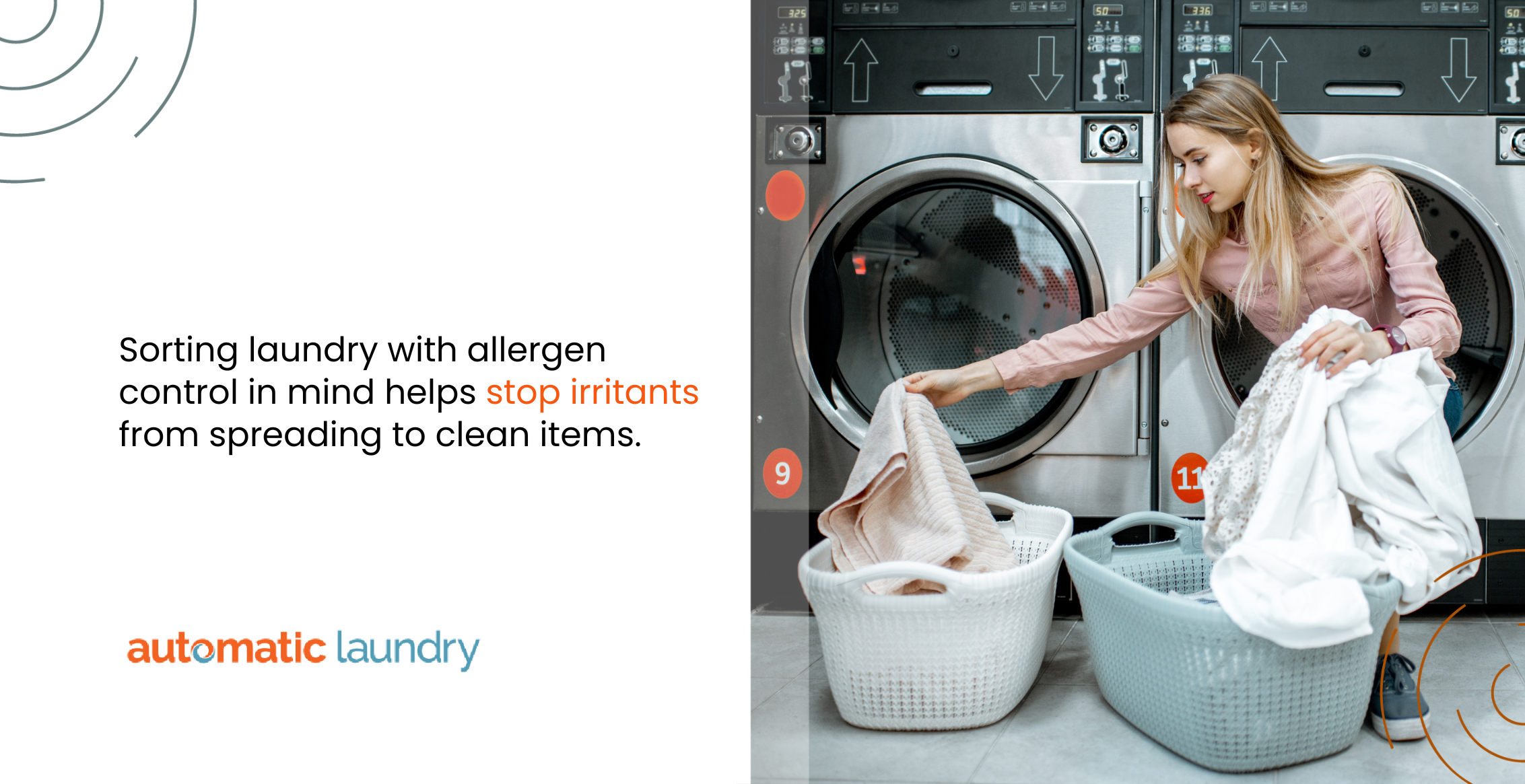
Sorting laundry with allergen control in mind helps stop irritants from spreading to clean items. The most effective approach is to wash heavily contaminated fabrics, such as bedding and outdoor clothing, in separate loads from everyday garments. This keeps pollen, dust and animal dander from transferring during the wash cycle and allows those high-exposure items to be cleaned more thoroughly. Planning loads in advance instead of mixing everything together leads to better results and helps keep freshly washed fabrics as clean as possible.
Best water temperatures for allergen control
Water temperature plays a key role in how well allergens are removed from fabrics. Many residents default to cold water for convenience. However, warmer settings often do a better job of breaking down pollen and dust. In community laundry facilities, choosing the right temperature can improve the effectiveness of each cycle without adding much extra effort.
Hot water works well for durable items like bedding and towels since it helps remove stubborn particles. Warm water is a good option for everyday clothing requiring a balance between care and cleanliness. Fabric labels should still guide final decisions. However, leaning toward warmer settings when appropriate can make a noticeable difference. Community laundry users who adjust temperature based on the type of load often find that their clothes feel fresher and cause fewer allergy issues after washing.
Choosing the right detergent and additives
Detergent choice directly impacts how fabrics feel and how well allergens are removed. In community laundry environments where machines are shared, selecting a gentle and effective detergent can help avoid added irritation. Fragrance-free and hypoallergenic options are often better suited for allergy season since they clean without leaving behind heavy scents.
Residents can also consider simple additives that support cleaner results. A small amount of white vinegar in the rinse cycle can help break down residue and leave fabrics feeling softer. It is important to avoid overloading detergent, since excess soap can trap particles instead of rinsing them away. Paying attention to product choices helps clothes come out cleaner and feel more comfortable against your skin throughout the day.
Drying tips to prevent recontamination
Drying methods matter just as much as washing when it comes to limiting allergens. In community laundry spaces, dryers offer a controlled environment that protects fabrics after they have been cleaned. Air drying outdoors might seem appealing, but it can expose items to fresh pollen before they are even worn.
Using the dryer properly can improve results. Cleaning the lint trap before each load supports better airflow and reduces leftover dust. Removing items promptly after the cycle ends prevents them from sitting in a shared space where particles may settle again. Community laundry routines that include careful drying habits help maintain the effort put into washing. Clean fabrics should stay clean from start to finish, and attention during the drying stage helps make that possible.

Community laundry best practices for allergy season
Shared laundry spaces work best when residents take a few simple steps to keep them clean and ready for use. Community laundry areas handle frequent use. Machines can collect residue throughout the day. Wiping down washer and dryer surfaces before starting a load helps remove leftover dust or detergent. Avoiding overloaded machines allows fabrics to move freely and come out cleaner, while promptly removing laundry keeps items from picking up new particles in shared spaces.
For communities looking to make this process even easier, Automatic Laundry provides reliable, well-maintained equipment and support that help residents get consistently better results. Contact our team to learn how upgraded community laundry solutions can create a cleaner, more comfortable living environment for everyone.