
Laundry appliances play a central role in shared laundry rooms. Their condition directly affects resident satisfaction and property value. When machines look clean and operate without issues, residents are more likely to trust the space and use it regularly. Property managers who invest in proper cleaning supplies can reduce maintenance issues, limit complaints, and create a more welcoming environment.
Clean laundry rooms also support health and safety expectations, which have become increasingly important in multi-housing communities. Small oversights such as residue buildup or unclean surfaces can quickly lead to odors, equipment strain, and negative perceptions. The right supplies make routine upkeep simpler and more effective.
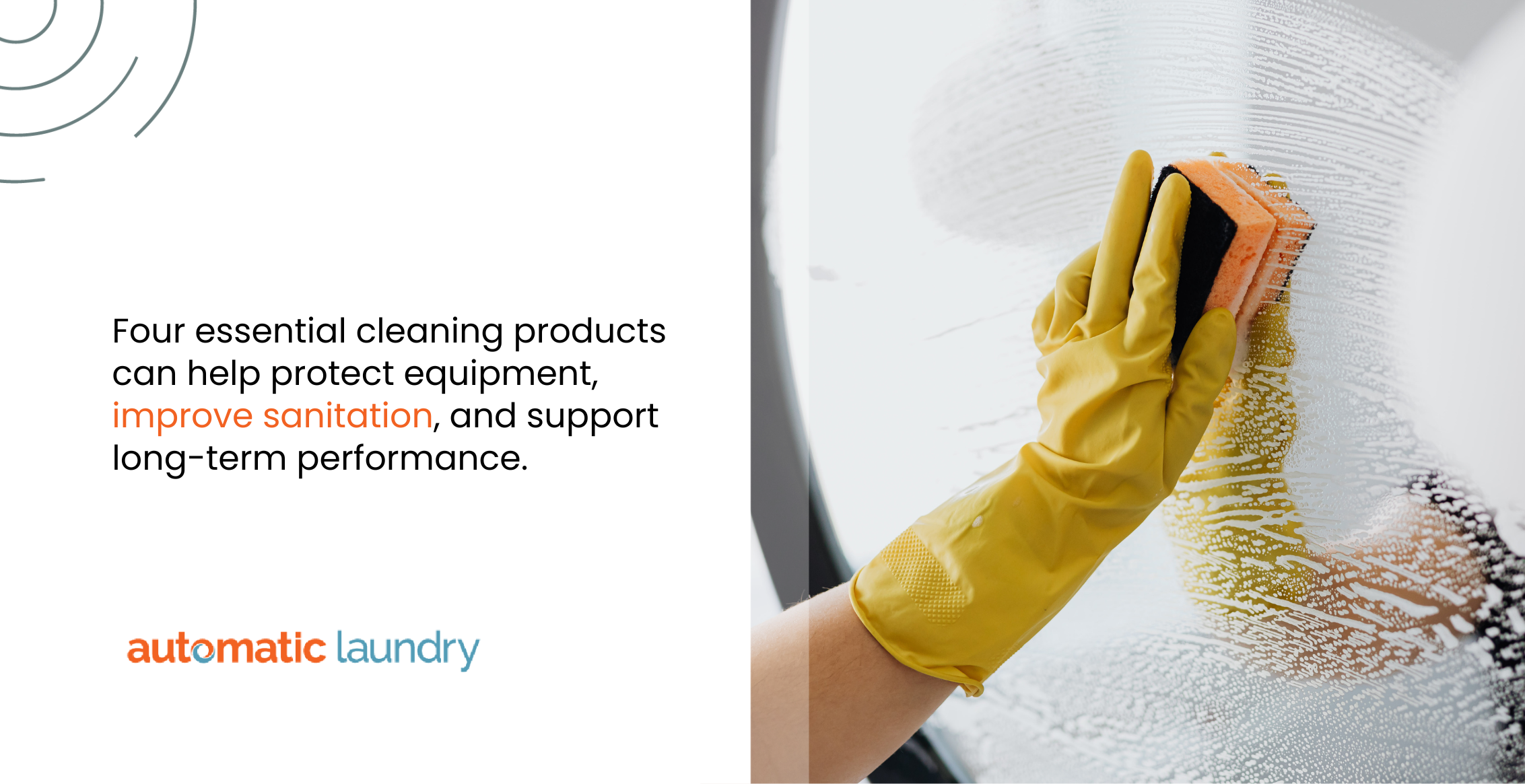
Four essential cleaning products can help protect equipment, improve sanitation, and support long-term performance. With consistent care and the right tools, laundry rooms can remain efficient, safe, and appealing for every resident who depends on them.
Why cleaning supplies matter for laundry appliances
Proper cleaning supplies play a direct role in maintaining the performance and lifespan of shared equipment. Laundry appliances experience constant use in multi-housing settings, which leads to build-up from detergent, fabric softener, and hard water minerals. Over time, this buildup can affect efficiency, increase energy consumption, and lead to more frequent service calls. Clean machines also reduce odors that often trigger complaints from residents.
When surfaces and internal components are neglected, bacteria and mold can develop, creating hygiene concerns. Property managers who prioritize routine cleaning can prevent these issues before they escalate. Well-maintained equipment also reflects positively on the property, signaling that management is attentive and proactive. Consistent upkeep supports smoother operation, fewer disruptions, and better long-term cost control. Having the right supplies readily available makes it easier for staff to stay on schedule and keep machines performing as expected.
1 – Disinfectant cleaners for high-touch surfaces
High-touch areas require frequent attention to maintain a sanitary laundry room environment. Laundry appliances include surfaces such as control panels, handles, and machine doors that residents interact with daily. Disinfectant cleaners help reduce the spread of bacteria and viruses in these shared spaces. Property managers should select products approved for use in public environments and safe for equipment finishes.
Regular wipe-downs improve the overall appearance of the laundry room and help build resident confidence in cleanliness standards. Staff can incorporate disinfecting into daily routines without adding significant time to their workload. Clear instructions or posted reminders can also encourage residents to take part in maintaining cleanliness. A consistent approach to surface cleaning helps prevent grime build-up and keeps machines looking well cared for. This simple step supports a healthier environment and contributes to a more positive user experience.
2 – Laundry machine cleaners and descalers
Internal maintenance is just as important as surface cleaning for long-term equipment performance. Laundry appliances can develop hidden build-up inside drums, hoses, and internal components from detergent residue and mineral deposits. Machine cleaners and descalers are designed to break down this accumulation and restore proper function. Regular use helps improve washing efficiency and reduces the risk of unpleasant odors transferring to clothing.
Property managers can schedule these treatments monthly or quarterly depending on usage levels. Following manufacturer recommendations helps avoid unnecessary wear and keeps machines operating at peak performance. These products are especially valuable in areas with hard water, where mineral build-up occurs more quickly. Incorporating machine cleaning into a routine maintenance plan can reduce service calls and extend equipment life. This proactive approach supports reliable operation and helps protect the investment in shared laundry equipment.
3 – Floor and spill cleaners
Clean floors contribute to safety, cleanliness, and overall perception of the laundry room. Laundry appliances are often surrounded by detergent spills, lint debris, and occasional water leaks that can create slippery conditions. Floor and spill cleaners help address these hazards quickly and effectively. Regular cleaning reduces the risk of accidents and supports compliance with safety expectations in multi-housing properties.
Staff should be equipped with appropriate cleaning solutions that can handle detergent residue without leaving behind slippery films. Routine inspections can help identify problem areas before they become larger issues. Keeping floors clean also prevents dirt and debris from being tracked into machines, which can impact performance over time. Consistent attention to this area supports a safer and more pleasant environment for everyone.
4 – Lint removal tools and airway cleaners
Lint buildup presents a serious concern in shared laundry environments and should never be overlooked. Laundry appliances that include dryers rely on proper airflow to operate safely and efficiently. Lint removal tools such as brushes and specialized vacuums help keep traps and surrounding areas clear. Airway cleaners and vent cleaning kits address buildup deeper within the system where blockages can form over time. Excess lint reduces drying efficiency and increases the risk of overheating.
Regular cleaning supports better airflow and shorter drying times, improving the overall user experience. Property managers should incorporate lint removal into routine maintenance schedules and train staff on proper techniques. Visible cleanliness around dryer areas also reassures residents that safety is taken seriously. Staying consistent with lint control protects equipment and reduces potential risks associated with clogged ventilation systems.
Best practices for using cleaning supplies in shared laundry rooms
A structured approach to cleaning makes it easier to maintain consistent results. Laundry appliances benefit from clearly defined schedules that outline daily, weekly, and monthly tasks. Daily efforts can focus on disinfecting high-touch surfaces and checking for visible debris. Weekly routines may include deeper cleaning of floors and surrounding areas. Monthly tasks should address internal machine cleaning and vent maintenance.
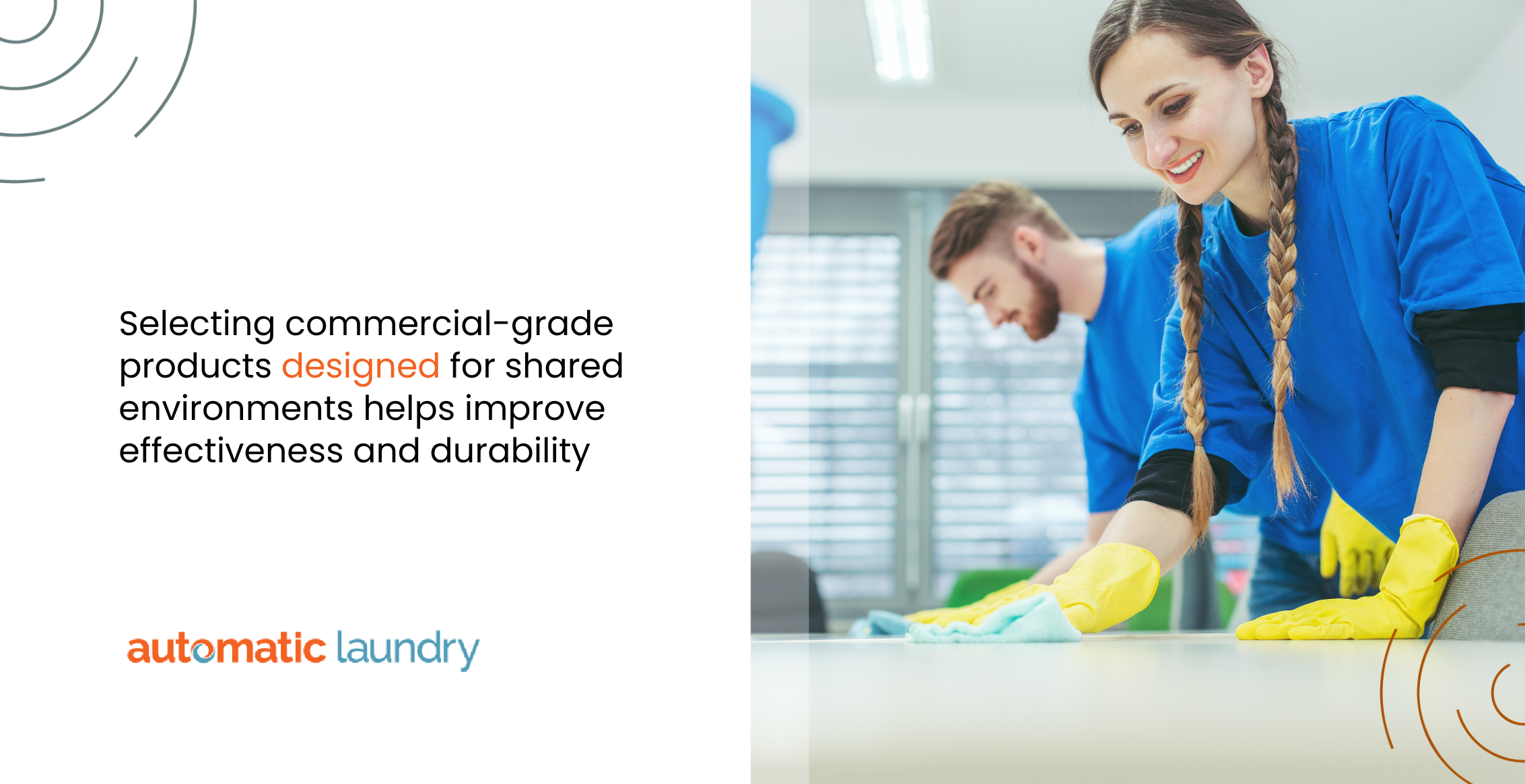
Assigning responsibilities to staff members helps create accountability and prevents tasks from being overlooked. Clear signage can encourage residents to clean up after themselves, which supports overall upkeep. Selecting commercial-grade products designed for shared environments helps improve effectiveness and durability. Training staff on proper product use also reduces the risk of damage to equipment. When cleaning becomes part of a consistent routine, it is easier to maintain a high standard without increasing workload significantly.
Supporting long-term laundry room performance
Consistent use of the right supplies contributes to better performance and fewer disruptions over time. Laundry appliances that receive regular care tend to last longer and require less frequent repairs. Clean, well-maintained machines also create a better experience for residents, which can influence retention and satisfaction. Property managers who prioritize maintenance often see reduced operational costs and fewer emergency service calls.
A clean laundry room reflects a higher standard of property management and can set a community apart from competitors. Preventive care is more cost-effective than reactive repairs, especially in high-use environments. Automatic Laundry understands the importance of keeping equipment running efficiently while maintaining a clean and reliable space. If you are looking to simplify maintenance, improve performance, or upgrade your laundry appliances, Automatic Laundry offers expert guidance and dependable solutions tailored to your property’s needs.